
Roofing
Guide
What
is a Roof System?
Choosing the Right Roof
Roofs Have Natural Enemies
Choosing a Contractor
Take Care of Your Roof & It Will
Take Care Of You
What
Is A Roof System?
All steep-slope roof systems (i.e., roofs with slopes of 25
percent or more,) have five basic components:
1.Roof
Covering: shingles, tile, slate or metal
and underlayment that protects the sheathing from weather.
2.Sheathing: boards or sheet material that are fastened to roof rafters
to cover a house or building.
3.Roof
Structure: rafters and trusses constructed to support the
sheathing.
4.Flashing:
sheet metal or other material installed into a roof
system's various joints and valleys to prevent
water
seepage.
5.Drainage: a roof system's design features, such as shape, slope
and layout that affect its
ability to
shed water.
6. Ventilation: gable vents,
ridge vents, off ridge vents
provide attic to control
temperature and moisture
in the attic. During the
summer, excess heat that
builds up in the attic during
the day results in high energy
costs for cooling. Moisture,
if not exhausted from the
attic, can condense and cause
insulation and construction
materials to deteriorate.
Flat roofs have special requirements.
Unlike steep sloped roofs,
which depend on gravity to
shed water, flat roofs use
drains to remove water and
rely on waterproof membrane
to protect the property.
Actually, the term 'flat'
is misleading here -- no
roof should be completely
flat or dead level. A dead
level roof is useless, except
maybe as a pond for birds. "Low
slope" is a more accurate
description of what is commonly
called a flat roof. Low slope
roofs should have at least
a 1/4 inch of slope per foot
(preferably more) so water
can flow downhill to drains
and then to the ground.
A variety of roofing systems
can be implemented on both
steep-slope and flat roofs,
each with distinct advantages
and disadvantages.
|
1.
Ridge
|
7.
Chimney Flashing |
| 2.
Rake Edge |
8.
Window Sash |
| 3.
Soffit |
9.
Window Sill |
| 4.
Valleys |
10.
Gable Vent |
| 5.
Downspout/Leader |
11.
Gutter |
| 6.
Dormer Flashing |
12.
Corner Post |
Deck/Sheathing
The surface, usually plywood or oriented strand board (OSB),
to which roofing materials are applied.
Dormer
A small structure projecting from a sloped roof, usually with
a window.
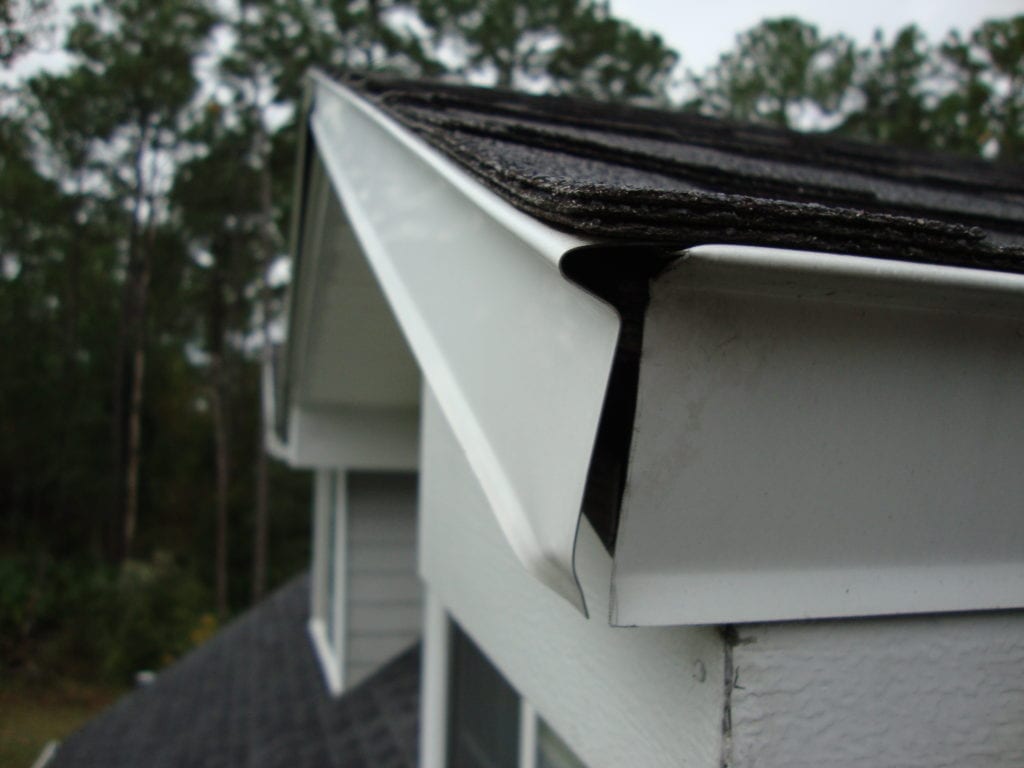
Drip edge
An L-shaped strip (usually metal) installed along roof edges
to allow water run off to drip clear of the deck, eaves and
siding.
Eave
The horizontal lower edge of a sloped roof.
Fascia
A flat board, band or face located at a cornice's outer edge.
Felt/Underlayment
A sheet of asphalt-saturated material (often called tar paper)
used as a secondary layer of protection for the roof deck.
Fire rating
System for classifying the fire resistances of various materials.
Roofing materials are rated Class A, B or C, with Class A materials
having the highest resistance to fire originating outside the
structure.
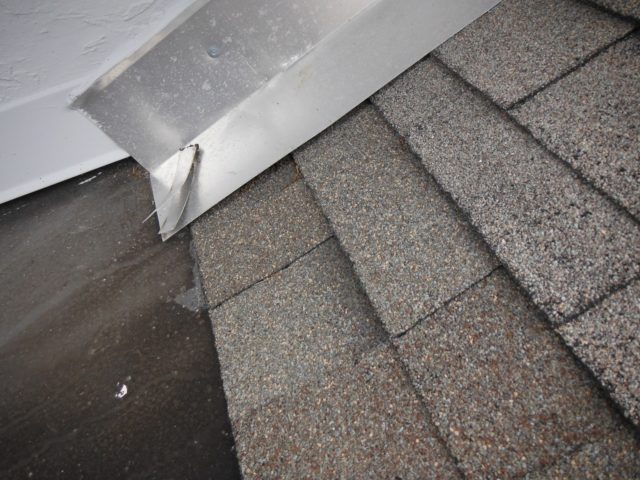
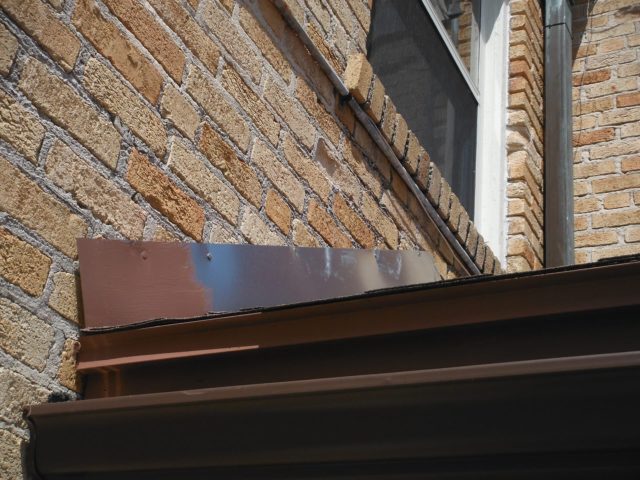
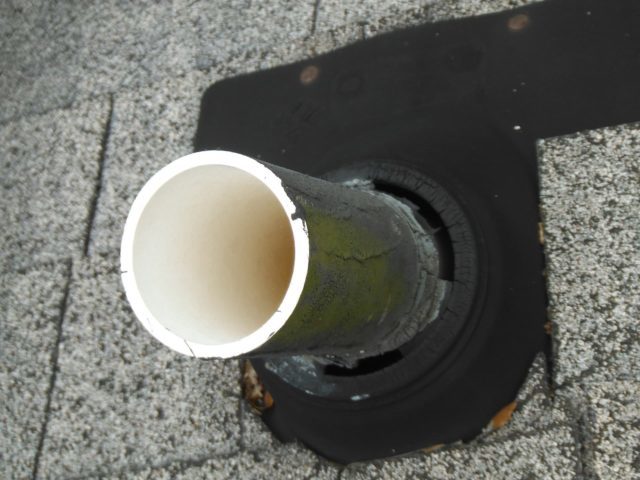
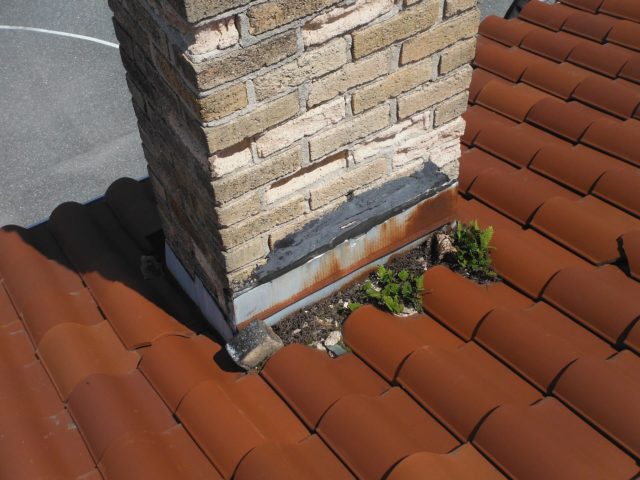
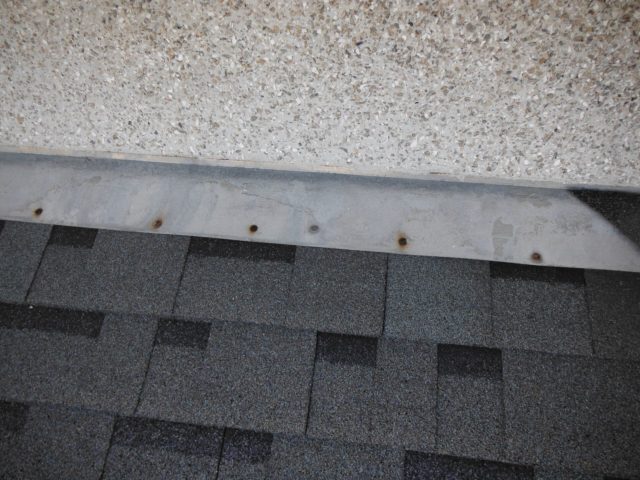
Flashing
Pieces of metal used to prevent the seepage of water around
any intersection or projection in a roof system, such as vent
pipes, chimneys, valleys and joints at vertical walls.
Louvers
Slatted devices installed in a gable or soffit (the underside
of eaves) to ventilate the space below a roof deck and equalize
air temperature and moisture.
Oriented strand board (OSB)
Roof deck panels (4 by 8 feet) made of narrow bits of wood,
installed lengthwise and crosswise in layers, and held together
with a resin glue. OSB often is used as a substitute for plywood
sheets.
Penetrations
Vents, pipes, stacks, chimneys-anything that penetrates a roof
deck.
Rafters
The supporting framing to which a roof deck is attached.
Rake
The inclined edge of a roof over a wall.
Ridge
The top edge of two intersecting sloping roof surfaces.
Sheathing
The boards or sheet materials that are fastened to
rafters to cover a house
or building.
Slope
Measured by rise in inches for each 12 inches of horizontal
run A roof with a 4-in-12 slope rises 4 inches for every foot
of horizontal
distance.
Square
The common measurement for roof area. One square is 100
square feet (10 by 10 feet).
Truss
Engineered components that supplement rafters
in many newer homes and buildings. Trusses are designed for
specific applications and cannot be
cut or altered. Valley
The angle formed at the intersection of two sloping roof surfaces.
Vapor retarder
A material designed to restrict the passage of water vapor
through a roof system
or wall.
Choosing
The Right Roof
When
selecting a roof system, durability and cost of course head
the list.
But keep in mind, aesthetics and architectural style are
important as well. The right roof system for you is one that
balances
all these considerations.
Steep-slope Roofs:
Shingle
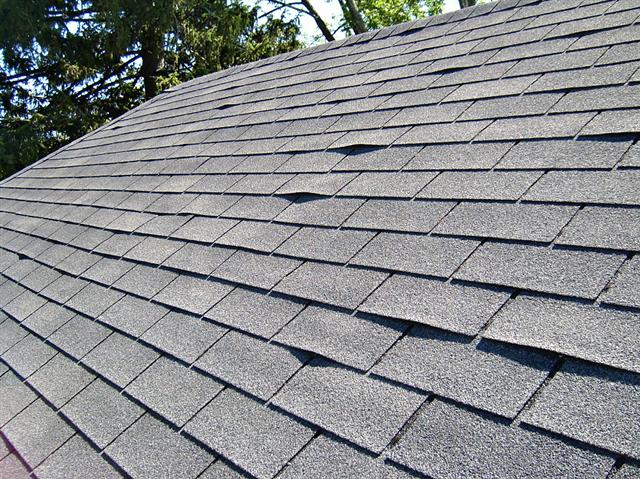
Shingles are by far the most popular product in the U.S. residential
roofing market. They can be reinforced with either organic
or fiber glass materials. Although shingles reinforced with
organic felts have been around much longer, fiber glass-reinforced
products have come to dominate the market. Shingle roofs,
when properly chosen and applied, require little or no regular
upkeep, and are easily repaired if damaged.
Tile
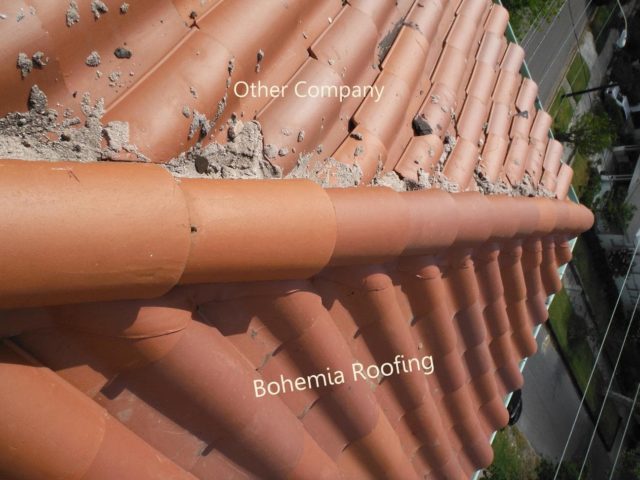
Clay and concrete tile are the two most widely available
forms of this roof material. It is a durable but fairly expensive
roofing material. Tile roofs rely on under-layment which
usually fails before the tile. "Mission-style" and "Spanish" round-topped
tiles are the most popular, but flat styles also are available
to create French and English looks. Tile is available in
a variety of colors and finishes and is very heavy. If you
are replacing another type of roof system with tile, you
will need to verify that the structure can support the load.
Metal
Metal roofs are very lightweight, weighing about one quarter
as much as tile roofs and nearly half as much as asphalt
shingles. Metal roofing is generally more expensive than
asphalt roofing, but cheaper than tile or slate roofing.
It has a long life and can even lower heating and cooling
costs because it reflects heat from the sun.
Polyurethane
Foam
Polyurethane foam is sprayed directly onto the roof, where
it "foams
up" and
solidifies before a protective coating is applied. Because of its flexibility,
foam is especially useful for roofs with unusual shapes or configurations
although foam is mostly applied to regular flat roofs. Foam has a number
of unique advantages
over other types of flat roofing systems. For one, it protects against
thermal shock and it can greatly reduce your air conditioning bills.
Intrigued? Visit
our section on foam roofs to learn more.
Modified
Bitumen
Modified bitumen's, like built up roofing, are made
of reinforced asphalt
impregnated felts. But, unlike BUR, the asphalt in the felts is
modified with plastic or
rubber polymers (hence the name) to improve its elasticity, durability,
and overall performance. Because of the added polymers, modified
bitumen are often
applied in a single layer with overlapping seams. They can be "glued" to
the roof with hot asphalt or an adhesive, or by using propane torches
to melt the
asphalt underside. Some modified bitumen require protective surfacing
materials, usually mineral granules or a liquid coating.
Low-slope Roofs:
The
three common installation methods are:
Torched-on (sometimes called heat welding)
Mopped-in with hot asphalt
Peel and Stick: a base sheet that has no coating
on the top surface, and a cap sheet that may have a granular
surface on the top. ?
Whichever
roofing system you choose, workmanship is very important. Make
sure you hire experienced, professional
contractors. And make sure they follow the roofing material
manufacturer's installation specifications.
Roofs
Have Natural Enemies
Sun,
rain, wind and cold -- a roof system's performance is affected
by
much of what nature throws at it. Knowing about these and other
factors will help
you make informed roof system buying decisions:
Sun
Heat and ultraviolet rays cause roofing materials to deteriorate
over time. Deterioration can occur faster on the sides facing
west or south.
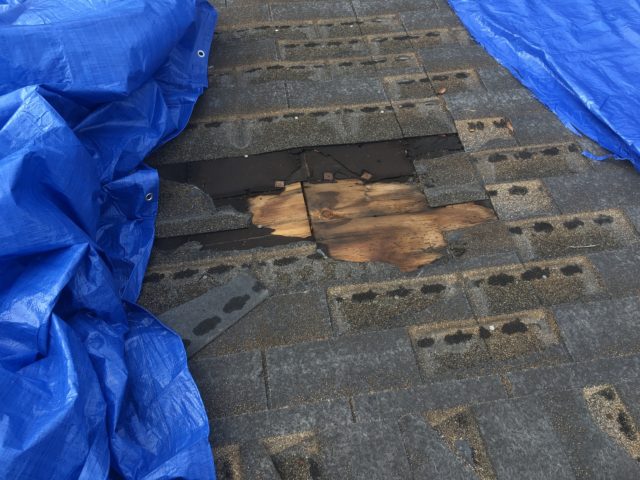
Rain
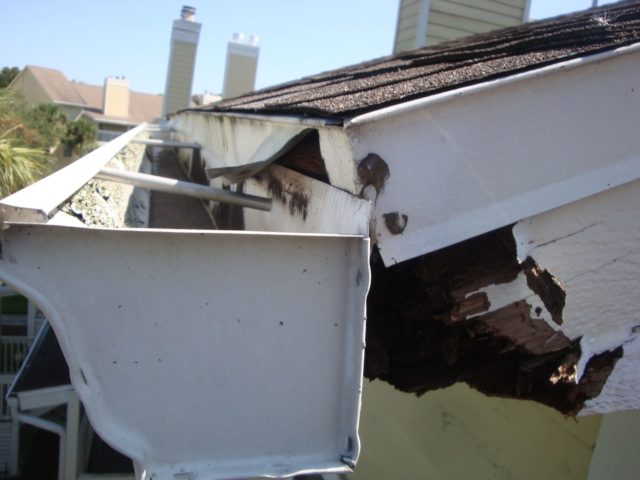
When water gets underneath shingles, shakes or other roofing
materials, it can work its way to the roof deck and
cause the
roof structure
to rot. Extra
moisture encourages mildew and rot elsewhere in a house,
including
walls, ceilings, insulation and electrical systems.
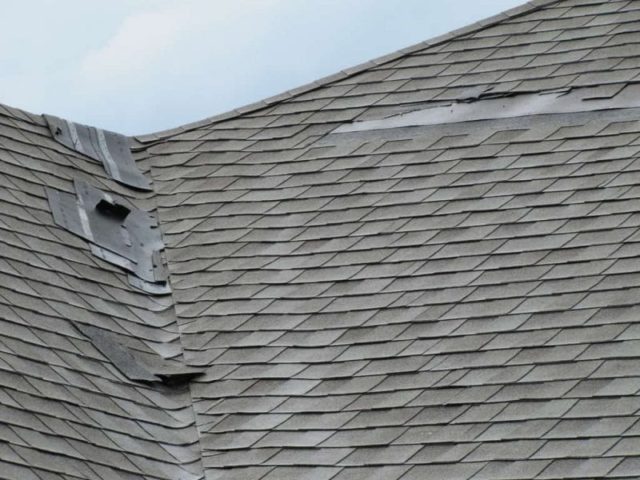
Wind
High
winds can lift shingles' edges (or other roofing materials)
and force water and debris underneath them. Extremely
high
winds can cause
extensive
damage. Thermal
Shock
Thermal shock is the expansion and contraction of the
roof system due to extreme temperature changes. For example,
thermal
shock
often occurs
when a cold rain
shower suddenly cools a roof during a hot day.
Condensation
Condensation
can result from the buildup of relatively warm,
moisture-laden
air. Moisture in a poorly ventilated attic promotes
decay
of wood sheathing and rafters, possibly destroying a roof
structure. Sufficient
attic
ventilation can be achieved by installing larger
or additional vents and will help
alleviate problems because the attic air temperature
will be closer to the outside air
temperature.
Moss & Algae
Moss
can grow on moist wood shingles and shakes. Once it grows,
moss holds even more moisture to a
roof system's
surface, causing
rot. In
addition, moss
roots also can work their way into a wood deck
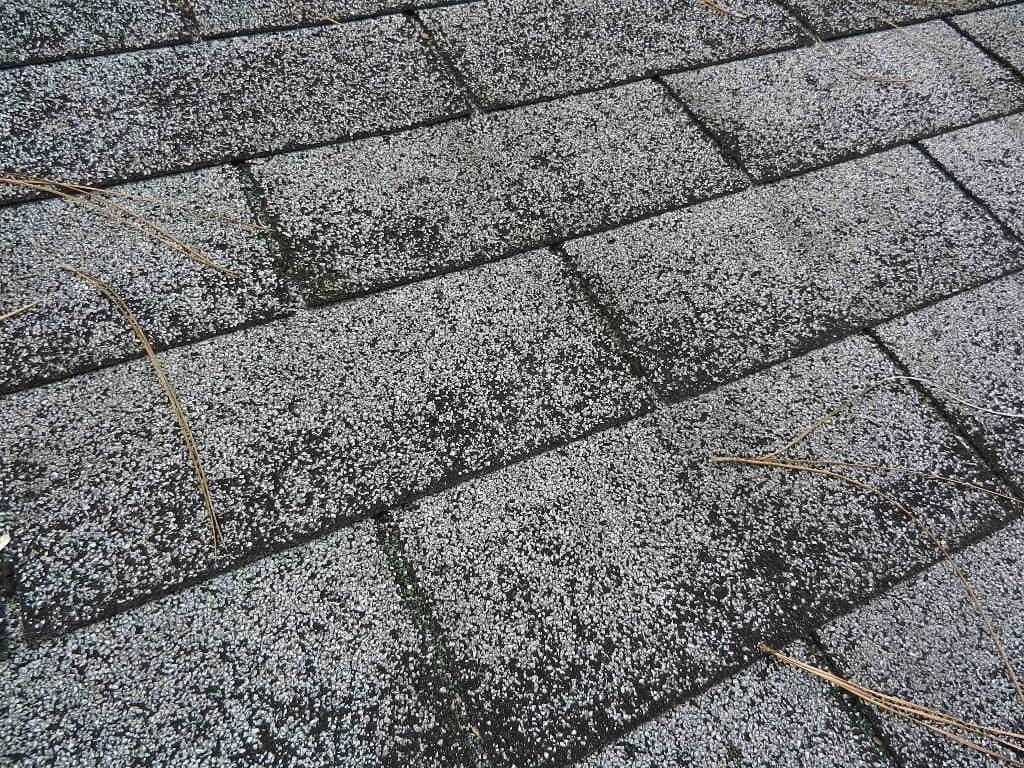
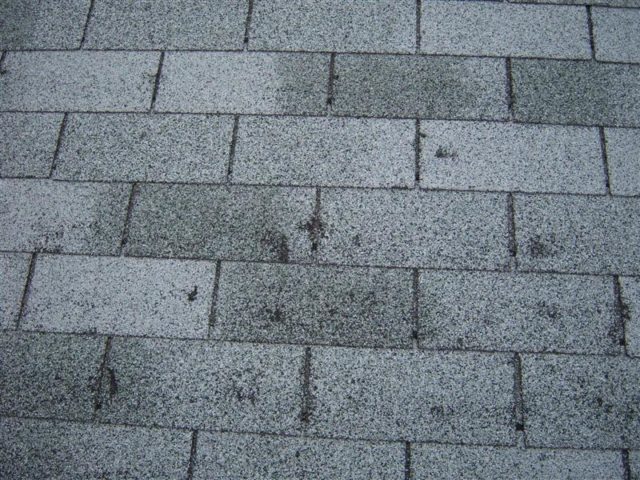
and structure. Algae also grows in damp, shaded areas
on wood or asphalt
shingle roof
systems. Besides creating
a black-green stain, algae can retain moisture,
causing
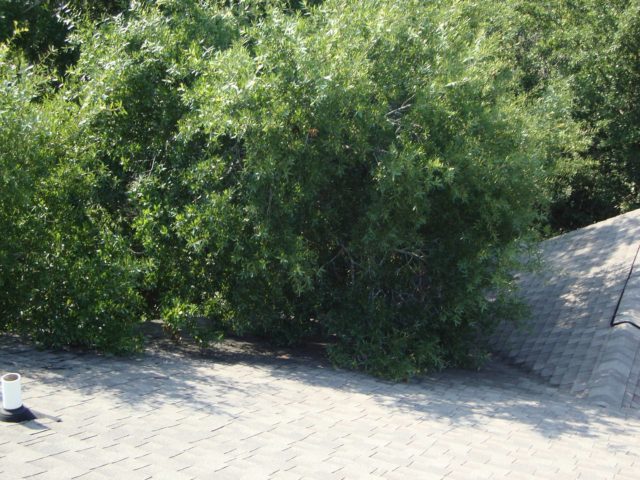
rot and deterioration. Trees and bushes should
be trimmed away from homes
and buildings to
eliminate
damp, shaded areas, and gutters should be kept
clean to ensure good drainage.
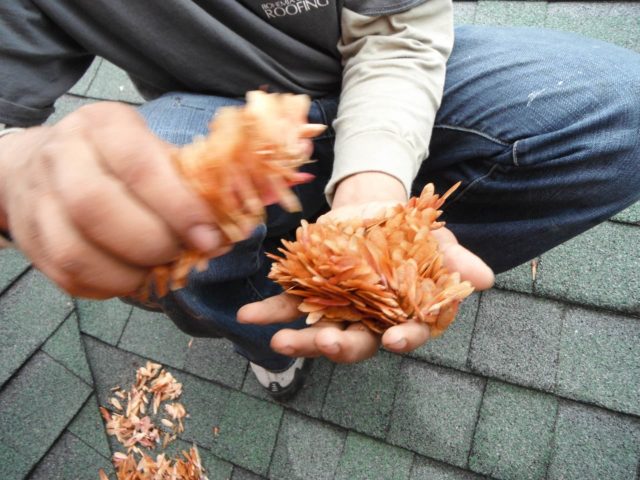
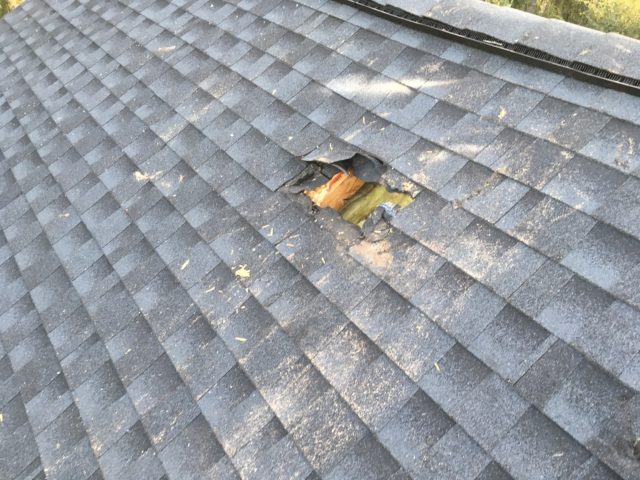
Trees & Leaves
Tree
branches touching a roof will scratch and gouge roofing
materials when the branches are blown by
the wind. Falling branches from
overhanging trees
can damage, or even puncture, shingles and other
roofing materials. Leaves on a roof system's
surface retain
moisture and cause rot,
and leaves in the
gutters block drainage.
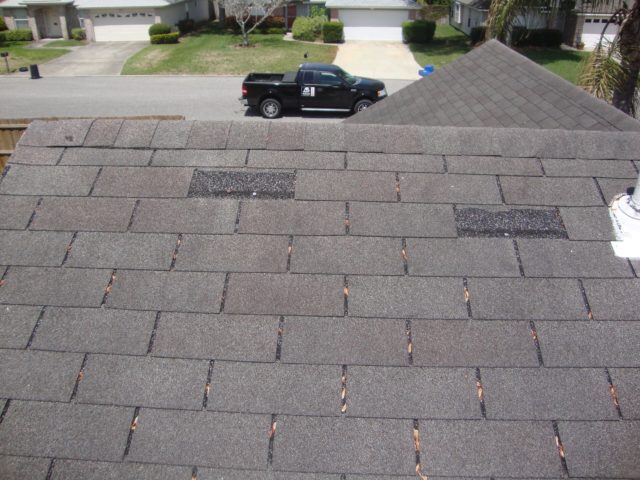
Missing
Or Torn Shingles
The key to a roof system's effectiveness
is
complete protection. When shingles are missing or torn
off,
a
roof structure and home
or building
interior are
vulnerable to water damage and rot. The problem
is likely to spread-nearby shingles also are
ripped easily
or blown
away. Missing or torn
shingles should be replaced as soon as possible.
Shingle
Deterioration
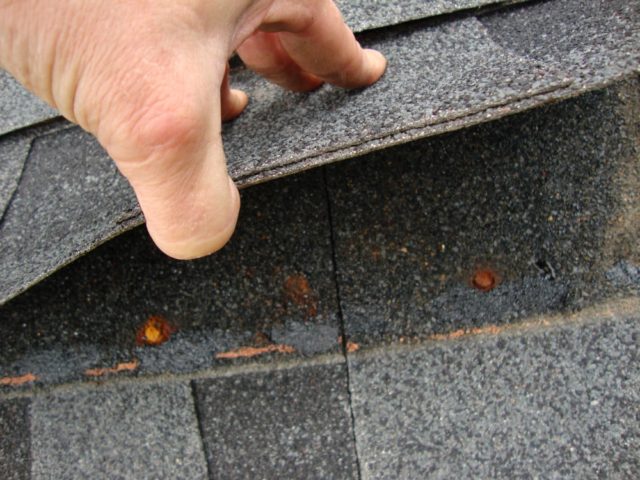
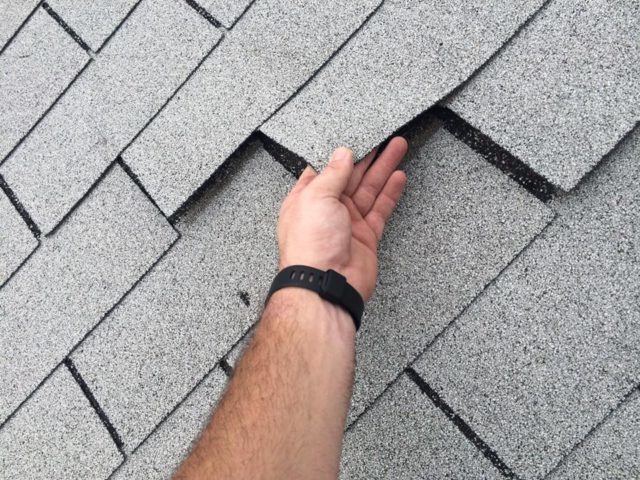
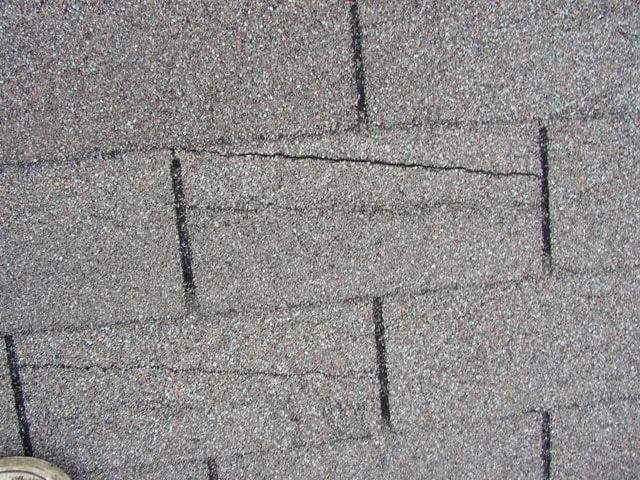
When shingles are old and worn out, they
curl, split
and lose
their waterproofing effectiveness. Weakened
shingles easily
are blown off, torn or lifted
by wind gusts. The end result is structural
rot and interior damage. A deteriorated
roof system only gets worse with time-it
should be replaced as soon as possible.
Flashing
Deterioration
Many apparent roof leaks really are flashing
leaks. Without good, tight flashings around chimneys,
vents, skylights
and wall/roof
junctions,
water can enter
a home or building and cause damage to
walls, ceilings, insulation and electrical systems. Flashings
should
be checked as part of
a biannual roof inspection
and gutter cleaning.
Ventilation
and Insulation
Are
Key
One of the most critical factors
in roof system durability is proper
ventilation. Without it, heat and moisture
build up in an attic area and combine to cause
rafters and sheathing to rot, shingles
to buckle, and insulation to lose its effectiveness.
Therefore, it is important to never block
off sources of roof ventilation, such as louvers, ridge
vents
or soffit
vents, even in winter.
Proper attic ventilation
will help prevent structural damage
caused by
moisture, increase roofing material life, reduce
energy consumption
and enhance the
comfort level
of the rooms
below the attic.
Choosing
A Contractor
Sure,
we want you to choose Bohemia Co. to do the job. But
we also understand that
buying
a
new roof
system
is an important investment.
So before you
choose anyone, we want to make sure
you understand how to evaluate roofing contractors.
We’re
sure you have heard that not all roofing contractors
are alike. We recommend that you prequalify roofing contractors
to get the job done right the first time. The following guidelines will help
you
select
a
professional:
1.
COMPANY INFORMATION - Check
for a permanent place of business (even if it is a home
office), tax
identification number and a business license.
www.sunbiz.org
www.myfloridalicense.com/dbpr
2. INSURANCE -Don't hesitate to ask a roofing
contractor for proof of insurance. In fact, insist on seeing
copies of the
liability coverage and workers' compensation certificates.
Make sure the coverage’s are in effect through
the duration of the job. Many building and home owners
have been
dragged into litigation involving uninsured roofing contractors.
Also, if a contractor is not properly insured, you may
be liable for accidents that occur on your property.
3. REFERENCES - Look for a company with
a proven track record that offers client and supplier references
and a list
of completed projects. Call these clients and suppliers
to
find out whether they were satisfied. Call the Building
department
in your county to confirm your bids are from certified
contractors.
To view permits in Duval County visit https://buildinginspections.coj.net/bid_secure/default.aspx
a)Select
SEARCH FOR ? permits
b)Select SEARCH BY ? State License Number ? fill in the
License # of a company you are inquiring about (Bohemia’s
CCC1328464)
c)The list of Active, Expired (meaning job of $2500 value
or less), Finalized permits will come up. (permits that
starts with the letter R = roofing)
Look at # of ACTIVE permits – Date since obtained,
and if older why are they still opened (INS tab, will show
the necessary inspections that a permit requires in order
finalizing the permit whether the inspections are showing
as PASS or FAIL. Unless you permit is finalized and work
done according to the building code (inspected by the county
officials) your manufactures warranty might not be valid.
4. PROPOSAL - Insist on a detailed, written proposal and
examine it for complete descriptions of the work
and specifications,
including approximate starting and completion dates and
payment procedures. Payments should only be a part of
the work already finished. In order to be licensed,
contractors
must demonstrate financial ability to perform the type
of work which the license contemplates. DO NOT PAY ANYONE
EARLY, FOR ANY REASON.
5. Have the contractor explain his project supervision
and quality-control procedures. Request the name of the
person
who will be in charge of your project, how many workers
will be required and estimated completion time.
6.
Call your contact local Better Business Bureau http://www.bbb.org or
Department of Professional Regulation http://www.myflorida.com/dbpr to check for possible complaints filed against the contractor.
7. Keep a healthy skepticism about the lowest bid. If
it sounds too good to be true, it probably is. Many fly-by-night
contractors' below-cost bids seem attractive, but these
contractors often are uninsured and perform substandard
work. Remember, price is only one of the criteria for
selecting
a roofing contractor. Professionalism, experience and
quality workmanship also should weigh heavily in your
decision.
Take
Care Of Your Roof & It Will
Take Care Of You
Roofing professionals generally agree that a good roof
system requires proper design, quality materials
and quality application to perform successfully.
Yet once
the roof is installed, nothing is more critical to
its long-term performance than establishing a program
of
regular inspections and proper maintenance.
Privacy
Policy
Bohemia Co., Inc. is committed to maintaining your confidence
and trust, and accordingly maintains the following privacy
policy to protect personal information you provide online.
Basic Confidentiality Policy
It is Bohemia Co., Inc.’s policy that personal
information, such as your name, postal and e-mail address
or telephone number, is private and confidential. Accordingly,
the personal information you provide is stored in a
secure location, is accessible only by designated staff,
and
is used only for the purposes for which you provide
the information.
No Release of Information to Third Parties
Personal information will not be released to third parties
onlyif release is required by law or is pertinent to
judicial or governmental investigations or proceedings.
There are no other circumstances under which we will
provide or sell personal information to third parties.
No Computer Tracking of Identifiable Information
Our computer is not set up to track, collect or distribute
personal information about its visitors. It does
recognize the home server of visitors, but not
e-mail addresses.
For example, we can tell which Internet Service Provider
our visitors use, but not the names, addresses or
other information about our visitors that would
allow us
to identify the particular visitors to our sites.
This information
is used only for internal purposes by Bohemia Co.,
Inc. technical support staff.
Bohemia
Co., Inc. system is not responsible for the privacy practices
or policies
of participants in its various programs.
How To Contact Us
Should you have other questions or concerns about
these privacy policies, please call us at (904)
859-3539 or send us an email at bohemiainc@hotmail.com.
|